The Right Fit: Creator-first global platform
Rejoining The Right Fit to lead the product transformation from Australian talent marketplace to creator-first global platform. Leading cross-functional teams of internal specialists and external partners to reimagine both brand identity and product offering for borderless creator opportunities.
The Right Fit connects brands with a global community of influencers and creators with a product that includes iOS, Android, and web applications.
- Year
- 2024 - 2025
- Client
- The Right Fit
- Contribution
- Product Strategy
Product Design
Web Design
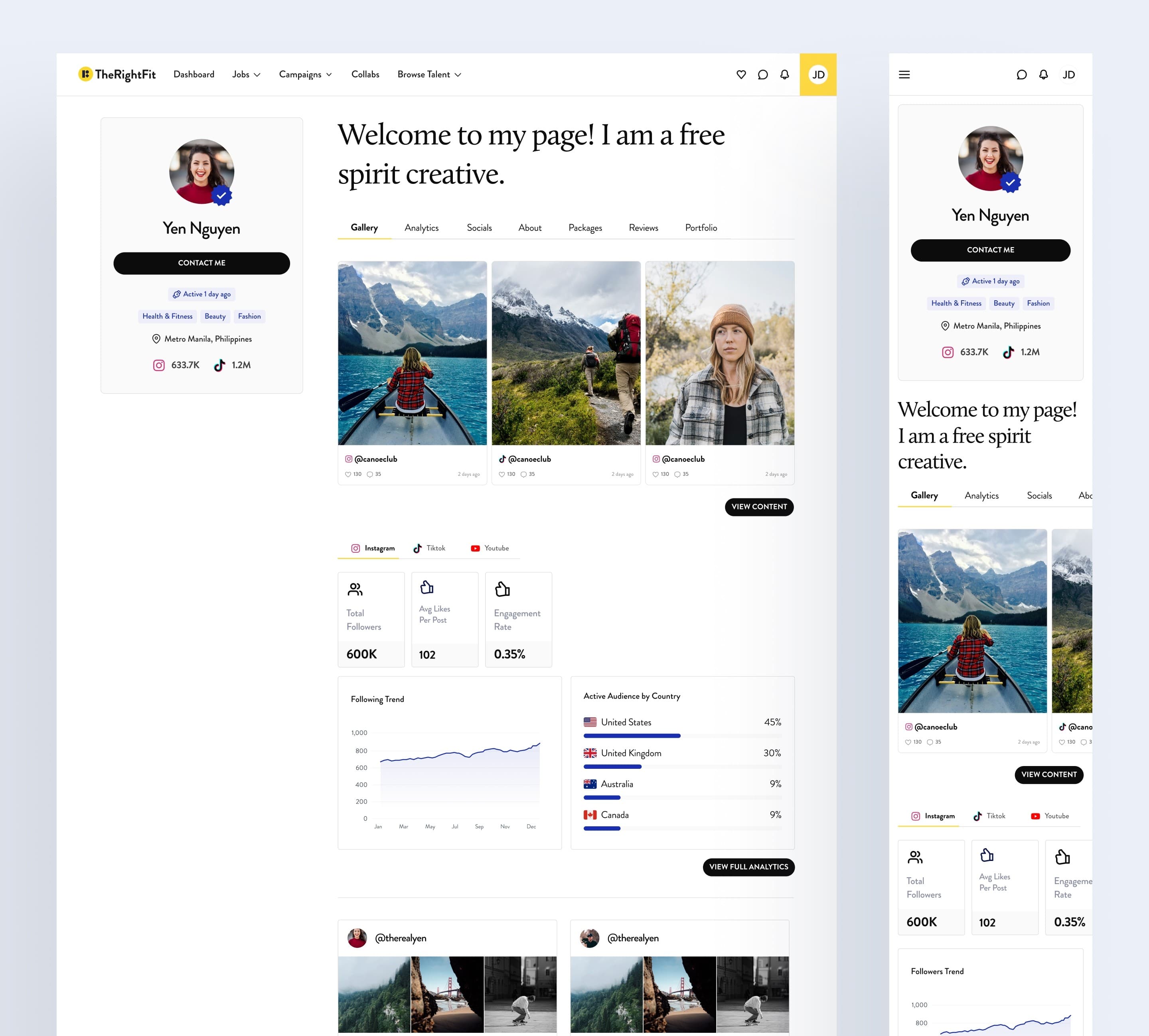
Clarifying the vision
Translating the leadership team's broad vision into something actionable. I created a framework connecting mission → vision → business outcome → north star metric → input metrics. Always starting with the problem and what success looks like.
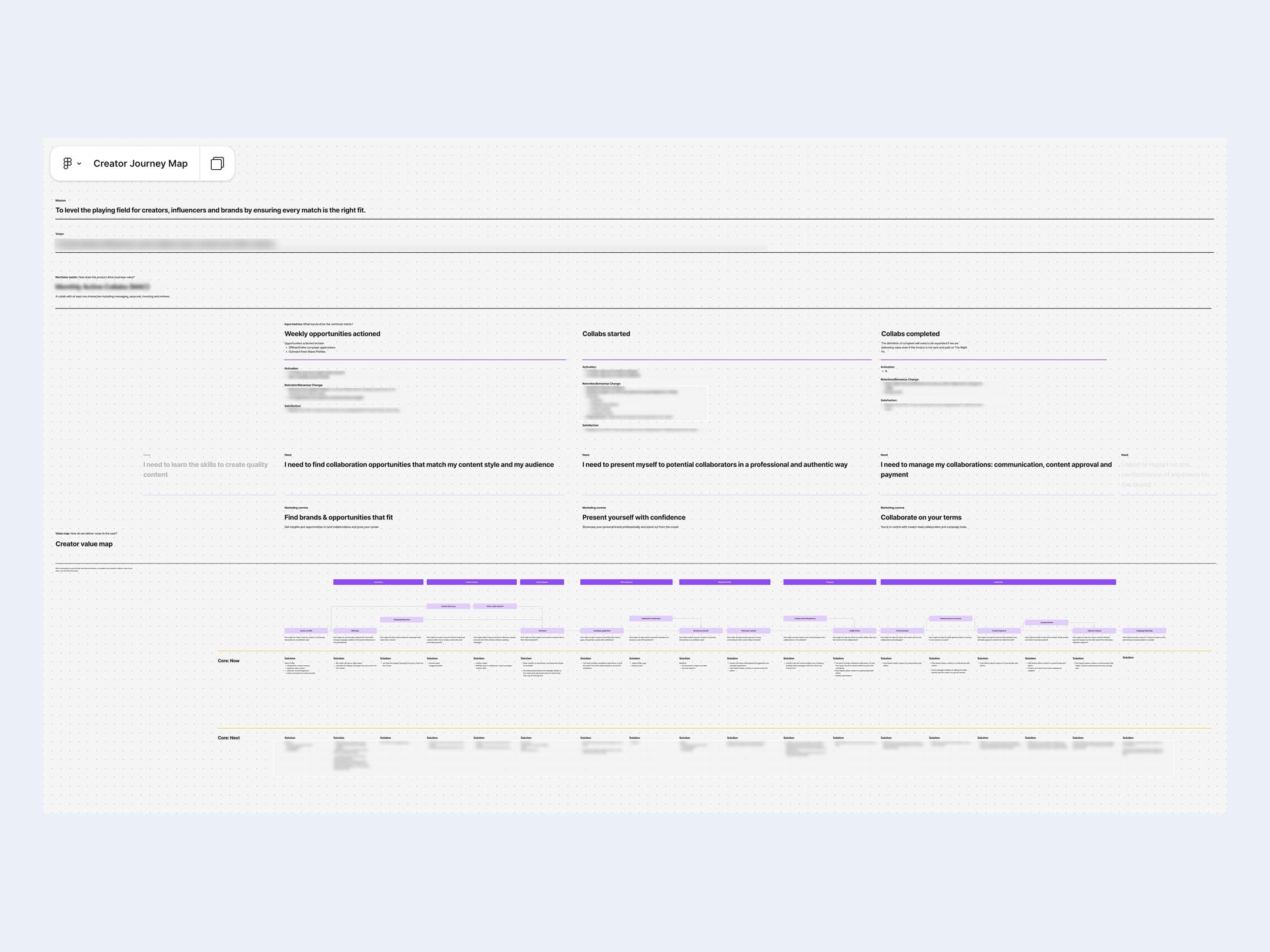
Mapping Both Sides of the Marketplace
It was important to map both the client's journey and the creator's journey. Over the year we focused on this, there were adjustments to how much we focused on one side of the marketplace versus the other. This meant slight differences in what we prioritised and what success looked like at any given time.
The consistent through line: we were trying to grow the creator side of the marketplace, starting with a test market of South East Asia and eventually the US.
While we tried to add value across multiple vectors for creators in an effort to validate what would increase creator sign ups and retention, we knew job opportunities would be a key need for creators. This naturally led to some focus on the brand side of the marketplace.
Creator profile
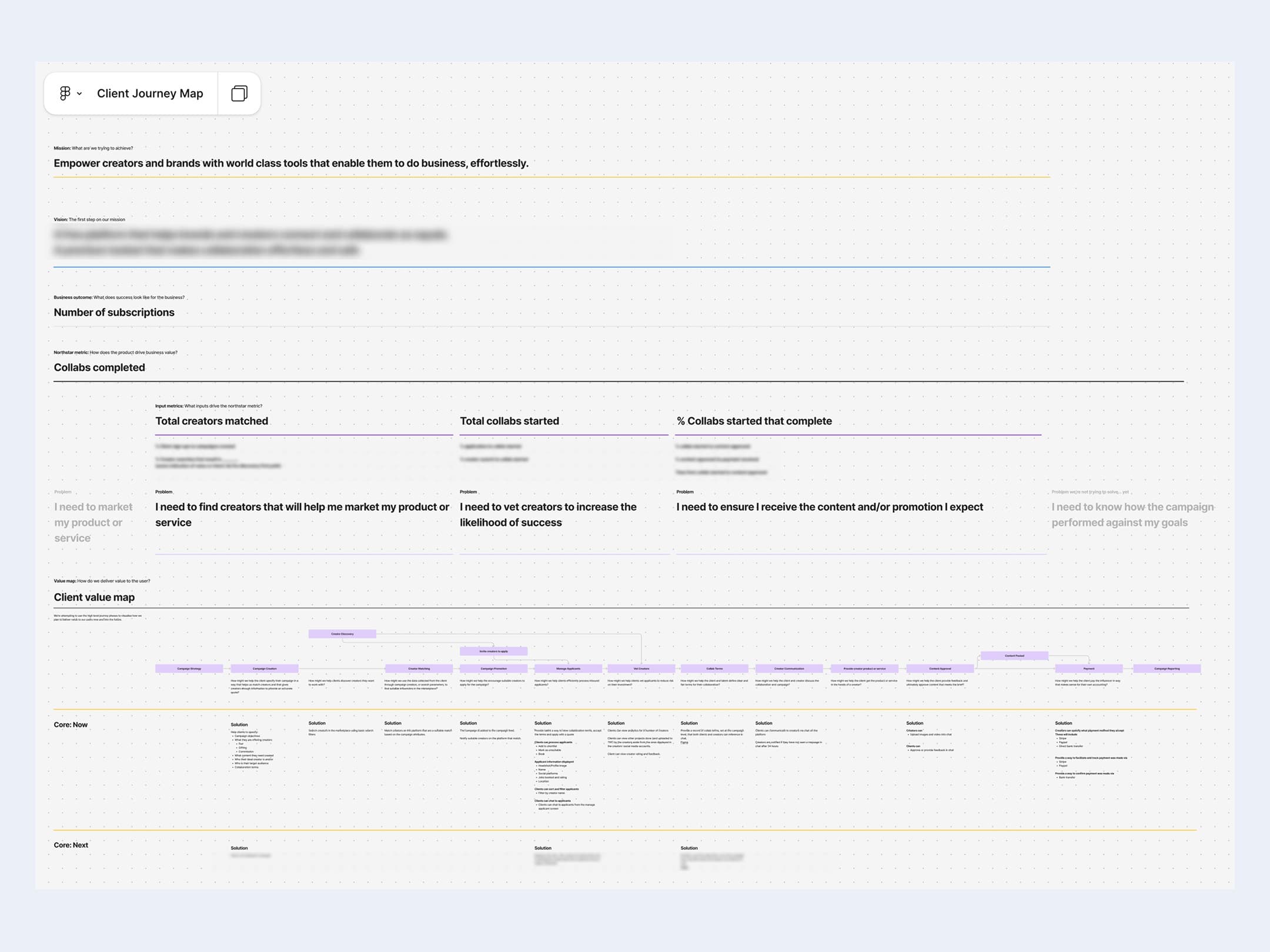
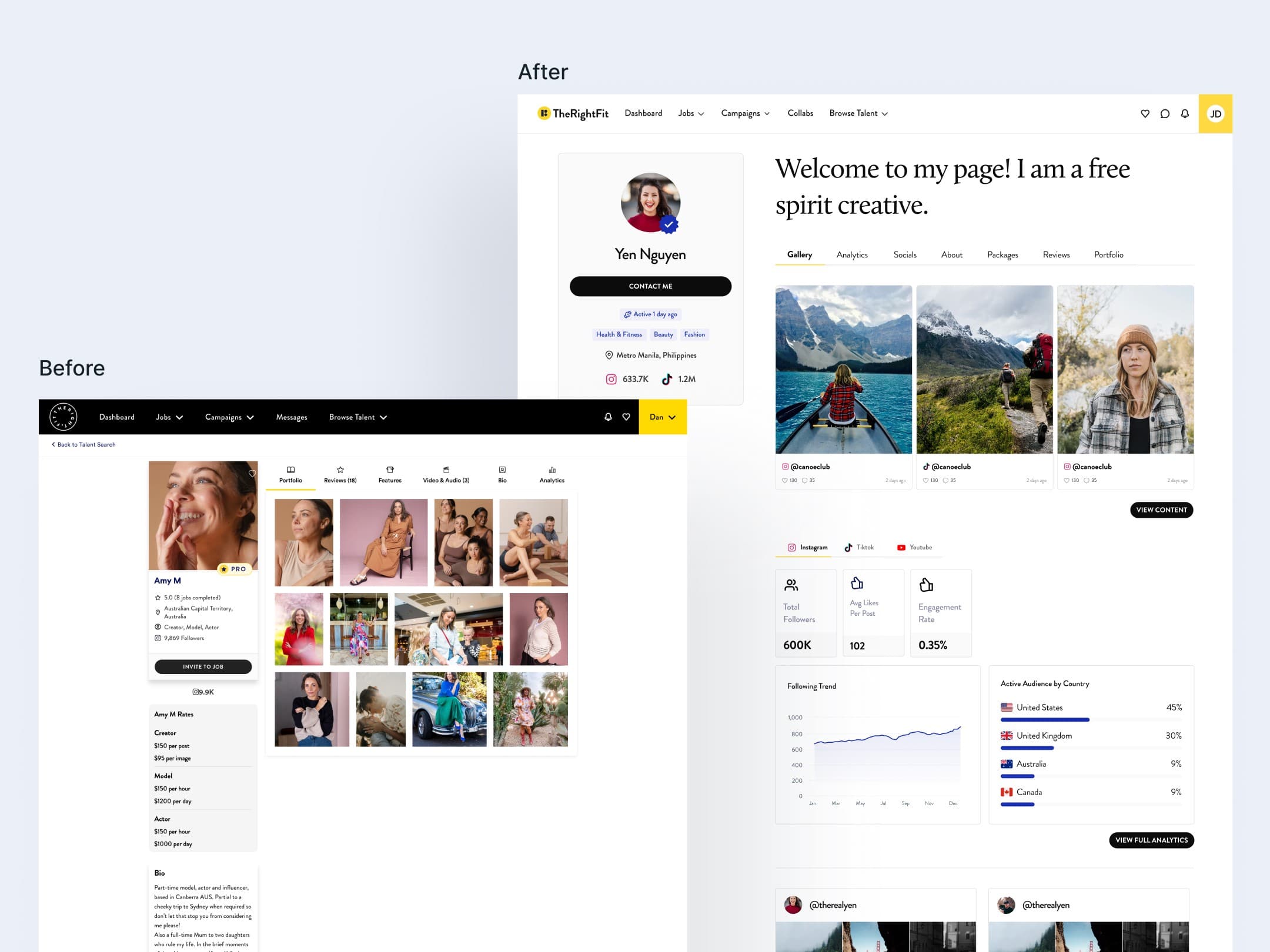
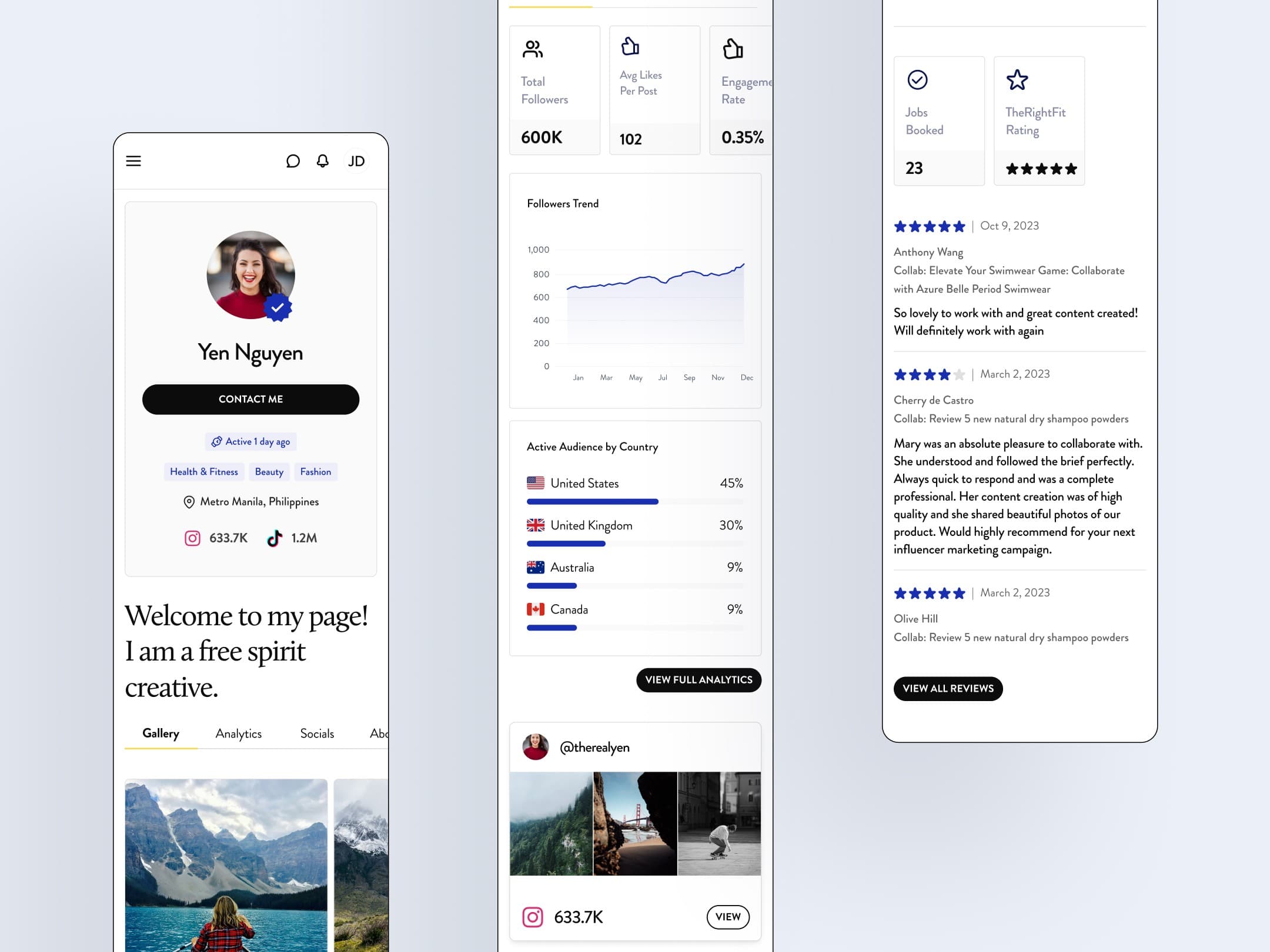
The original talent profile tried to accommodate models, actors, and creators in one structure. It forced creators into a framework that didn't reflect how they work or how brands evaluate them.
We interviewed 25 creators and surveyed many more to understand what they needed. The insight: creators don't have one story — they have multiple, depending on the brand and category they're pitching to.
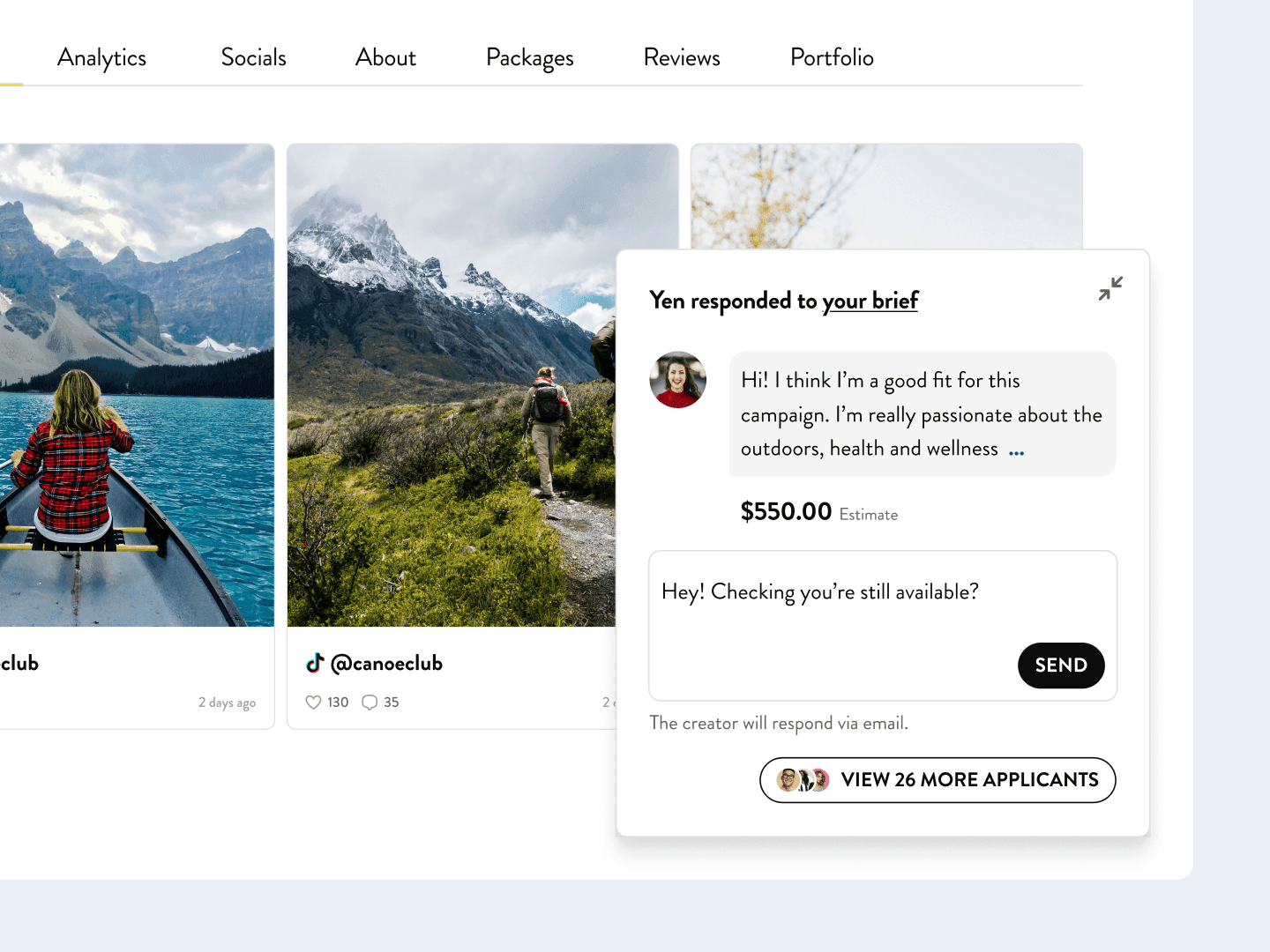
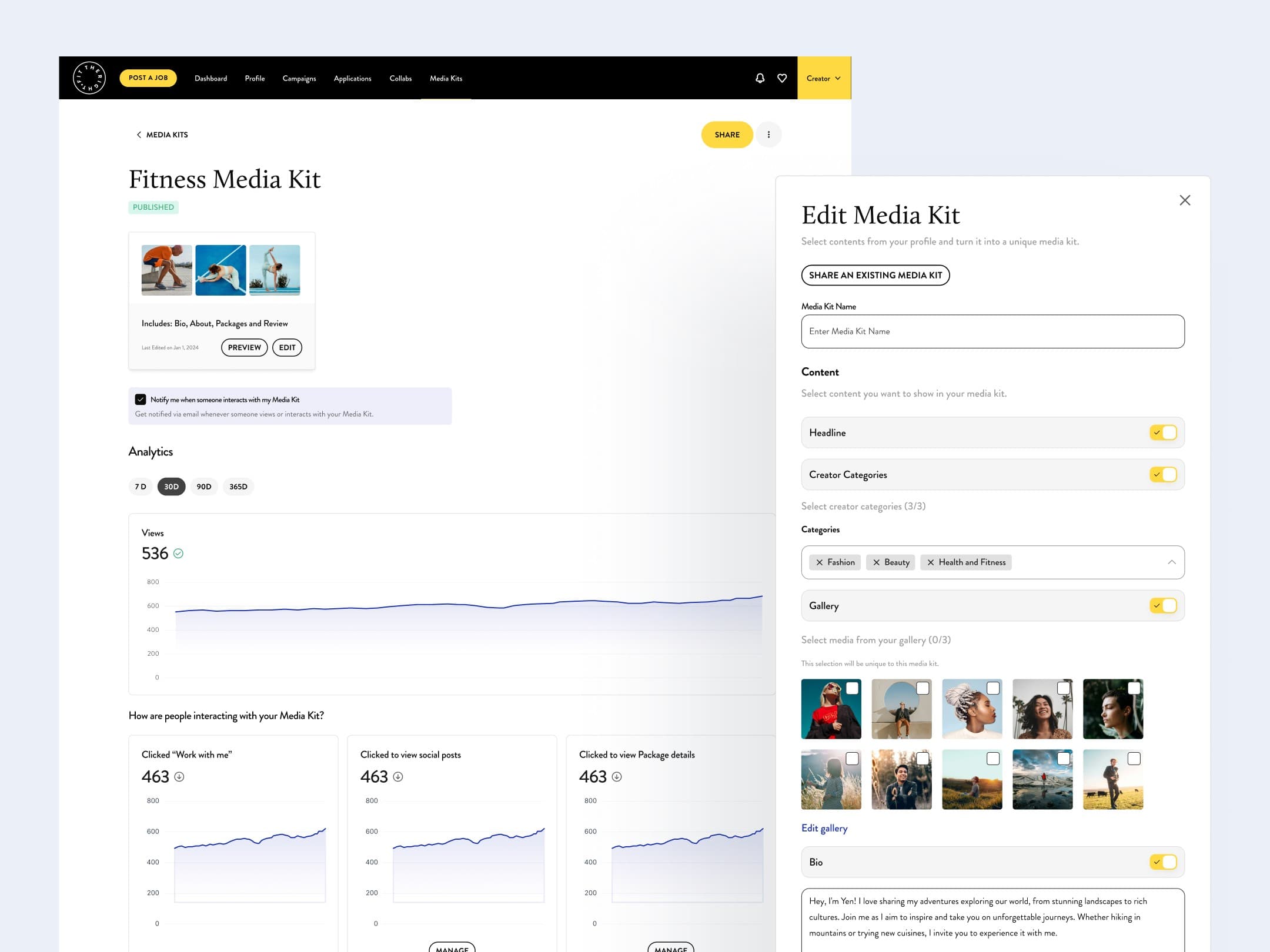
We built dedicated creator profiles and introduced Media Kits — curated, niche-specific versions of their profile. A creator could showcase their beauty audience and content for cosmetics brands, then switch to their fitness reach for athletic wear. Same creator, different narratives, optimized for each opportunity.
Campaign feed and details
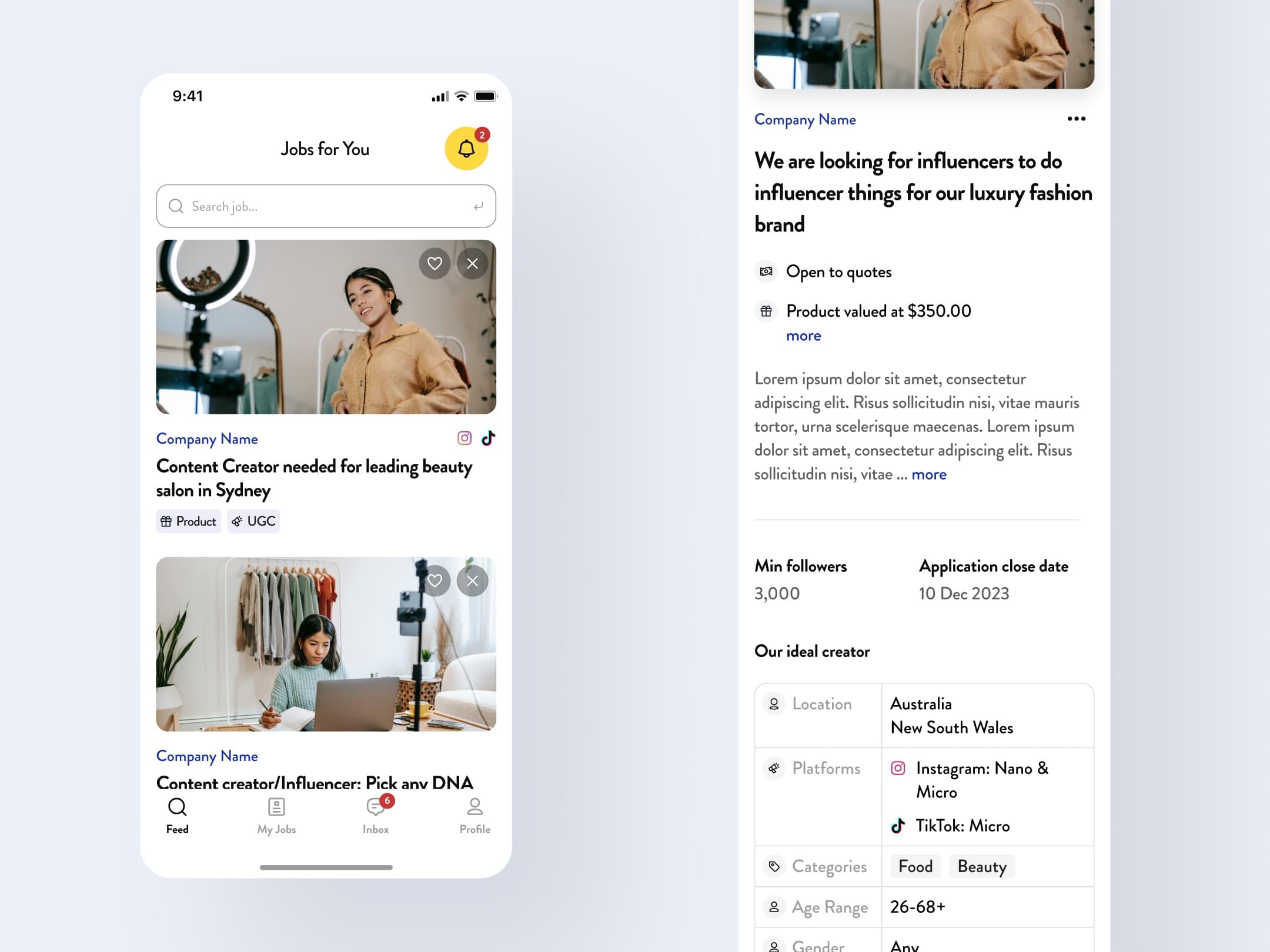
We researched what mattered to creators when vetting opportunities: brand alignment, creative freedom, content requirements, usage rights. Different priorities than models scanning for shoot dates and locations.
We built a dedicated “Campaigns” feed and redesigned the opportunity card. Every campaign now showed only what creators needed: brand story, deliverables, creative parameters, and terms. Clean signal, no noise.
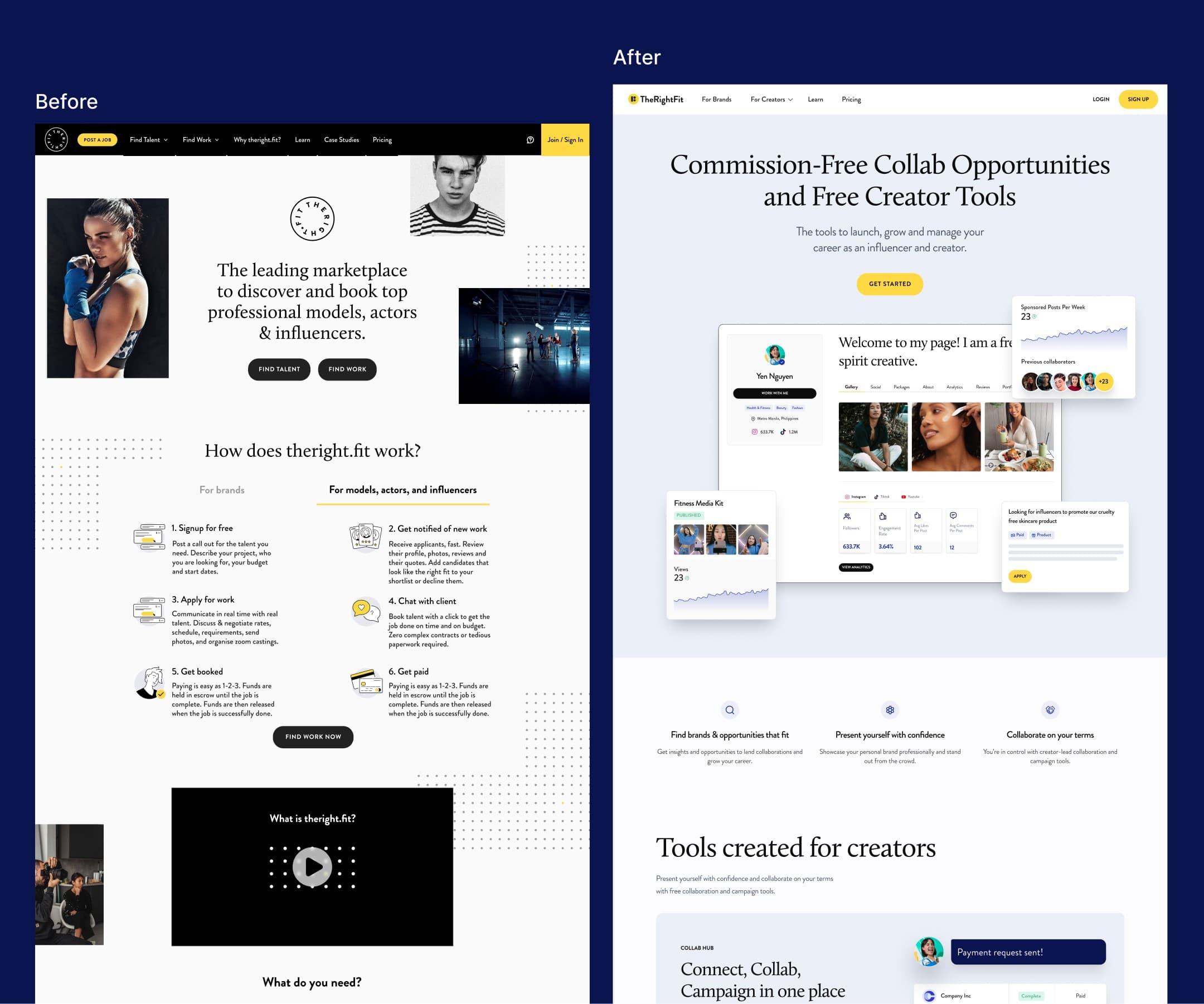
Brand and website update
The platform's branding still looked like a traditional talent agency — fine for models and actors, wrong for creators. The visual language, messaging, and website didn't reflect what we'd built: a creator-first marketplace.
We refreshed some logo and messaging with the help of external specialists, Aaron Paul Barnes and Tenielle Stoltenkamp. New visual system, new messaging, rebuilt website. The language shifted from “bookings” to “collaborations,” from “talent” to “creators,” from showcasing portfolios to highlighting audience connection and partnership outcomes. A huge effort, condensed into one paragraph.
Result
To recap, the primary goal was to focus on the creator use case (The Right Fit also connects clients with models and actors) and take this creator-first product to an international market.
We focused primarily on the creator experience — they were traditionally the most underserved in the market. We had experience delivering value in the form of job opportunities, but we wanted to see whether we could deliver differentiated value in the form of additional creator tools to help them on their journey.
We did initial testing on product and marketing in South East Asia before turning our focus to creators in the US market.
US creator sign-ups grew significantly over 8 months. The US shifted from a minor market to our largest source of creator growth, overtaking Australia to become our primary growth market.
Our product discovery led us to uncover and meet needs that were important for the creator journey. But the one burning need was the opportunities themselves — the collaborations.
Without scaling opportunities in turn, and attempting to fill that value gap with creator tools, we had proven a decent business, a solid product with clear potential. But the team had their sites set on bigger goals.
The broader bet on creators and the creator economy (and away from models and actors) showed a lot of promise. Almost all the features we built now form the foundation for the creator and brand experience, which went part way to hedging our bet on the time spent building creator-first tools beyond opportunities.
This played a big part in what happened next…
Takeaways
Could we have arrived at this conclusion sooner? Yes. While these experiments needed time to be proven out, two lessons are top of mind:
- Right-sizing growth targets:The growth we saw was significant, energising for the team, and it felt meaningful, but it wasn't consistently recalibrated against longer-term goals. We could have changed course sooner.
Learning: Alignment needs to be revisited and scrutinised regularly to catch drift as early as possible. - Start smaller: The business had 9 years of experience delivering value to creators through job opportunities, and a strong understanding of the user born from that experience. When it came to building new creator tools, we could have started smaller and validated (or invalidated) solutions with more rigour early on.
Learning:Domain expertise is valuable, but it doesn't replace validation. Even when you know your users deeply, start smaller when moving into new problem spaces. Strong confidence born from experience in one area doesn't automatically transfer to adjacent problems.
In closing
This is an incredibly small sample of the total discovery work and features we built attempting to achieve our goals. The product team were absolutely essential to any success we achieved, as were our engineering and GTM partners, both internally and externally.